
What Your Doctor Won’t Tell You About Breastfeeding
I didn’t ask nearly enough questions about breastfeeding before my baby was born.
I assumed that since breastfeeding was natural, it would be easy. I couldn’t have been more wrong…

Note: This post contains ad links to products I love and use; read our disclosure policy here.
The Truth About Breastfeeding (and what no one tells you)
The number one thing that most women (myself included) don’t realize beforehand: breastfeeding is tough, painful (sometimes excruciatingly so), and often discouraging.
However, breastfeeding does get better once you make it past those brutal first few weeks.
And sticking it out was the best decision I could have made!
Unfortunately, I see so many women get down on themselves and throw in the towel early. Often they carry guilt about “quitting,” wishing they had been able to breastfeed to whatever their original goal had been.
Before I go on, I just want to clarify that the purpose of this post is not to bash formula moms.
I’ll never know what it’s like to be in someone else’s place, so I’m not going to judge them for their decision on how and what to feed their baby.
However, since I breastfed my baby for over two years, I’m asked a lot of questions: what’s my “secret,” and what it “should” be like.
I wanted to share what I learned through months of trial and error in hopes that I can help others get the answers they didn’t know they needed before their baby arrived.
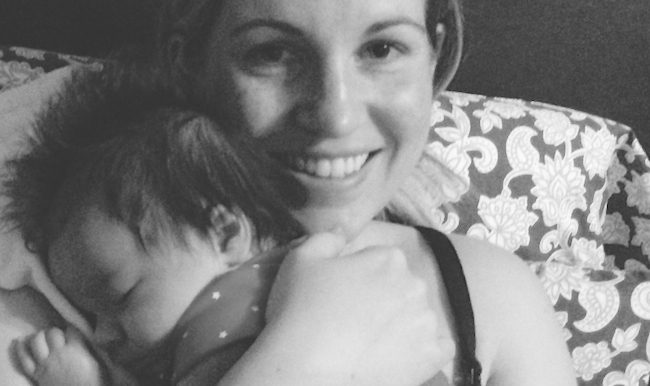
How I “Learned” to Breastfeed
First of all, I don’t think there’s truly a “right” way to breastfeed that works for everyone. It’s all about learning what works for you and your baby, and that takes time and practice.
In those early days, I had no clue what I was doing (and half the time no clue what was going on at all due to my post-surgery meds). I merely stared as the hospital’s lactation consultant pinched and shoved my breast in my baby’s mouth. That was about as comfortable as it sounds.
Throughout the next few weeks I suffered through upwards of twelve nursing sessions every day that sometimes stretched on for an hour at a time. My baby seemed insatiable, and to top it off, she often clawed at me, writhed in my arms, and screamed between gulps. My nipples were cracked and bleeding and she didn’t even seem to appreciate it!
Surely this wasn’t ok, this couldn’t be normal. Breastfeeding was supposed to be this wonderful bonding experience — it wasn’t supposed to HURT! Was I doing it wrong? Was my baby getting enough to eat? Surely she had to be, since she was on my boob literally twelve hours a day, but I did have one doctor suggest that I supplement. My gut said no, and I pressed on, determined to make it work.
My mom suggested I reach out to one of my cousins for advice. I was a little nervous and ashamed to ask for help — I seemed to be failing big time and who wants to admit that? To my surprise, my cousin commiserated with my pain, and encouraged me to hang in there. She assured me that my body would get used to it, my baby would get better at it, and it wouldn’t hurt forever.
Related: How to find breastfeeding support near you
She was right. It took about three months, but one day I realized that it wasn’t painful anymore, at all. In fact, I kind of enjoyed nursing.
My baby was growing and thriving, and amazingly, she was a big baby (consistently 70th percentile). That was a surprise, as both my husband and I are on the small side. My body alone was nourishing this little being, and was actually doing a darn good job at it! I was amazed and proud at the same time.
Pumping isn’t much fun, but it is do-able
Going back to work brought a new challenge: the dreaded pumping sessions. Twice a day I retreated to the third-floor (and not accessible to the public) bathroom where my supervisor had fixed up the handicapped stall for me with an armchair, table, and extension cord. The cleaning crew thoughtfully mopped almost every day, even though I was the only one using it.
Pumping took at least twenty minutes and was mind-numbingly boring. I would stay until I had replaced what I knew my baby was drinking while I was away.
Sometimes when I arrived home, to my despair, the baby had been extra hungry and dipped into a third bottle. I then felt obligated to squeeze in a pump before bed to “catch up.” Every night I had to wash and sterilize all the pump parts and pack my bag for work the next morning. (I definitely recommend getting a spare set of parts— this is the set I bought to go with my Medela Pump-in-Style Advanced).
And so the cycle repeated until I left that job. It was an occasion worth celebrating when I putaway my pump for the last time.
Doctors don’t volunteer much information on breastfeeding—their primary goal is to get the baby out. From what I can tell, a lot of women are either too scared to ask or like me assume it will all be instinct. I didn’t even know there was such a thing as a lactation consultant until she stopped by to check on me a few hours after birth (thank goodness!)
Since I get asked, what’s my “secret,” I wanted to share a few things that I learned the hard way. Knowing these from the start would have eased my worries and let me know that I was doing ok. Hopefully they will help you too!

5 “Secrets” I had known about breastfeeding before my baby was born:
- Newborn stomachs are tiny, maybe they size of a marble, so it doesn’t take much milk to fill them up at this point (the “magic number” of 4 ounces doesn’t apply until much later.) However, new babies aren’t very efficient and can take thirty minutes to an hour to get those few drops out. That could understandably be frustrating, so don’t think you’re doing something wrong if your baby cries— a lot.
- Breast milk digests quickly, so when your baby cries an hour after you last fed them, they ARE hungry. This doesn’t mean that you’re not making enough milk, it just means that they’ve already used up the milk in their tummy and need more. Your baby will nurse at least 8-12 times a day (and night) at first. If your baby is making lots of pee diapers then they are getting plenty to eat.
- Breastfeeding can be painful, very much so, for the first few weeks. Remember, you have a ravenous little person sucking on a very sensitive area for hours upon hours a day. Lanolin is your friend—apply liberally after every session. It can stain, so wear loose clothes (and nothing expensive…just in case you were thinking about dressing up…ha!)
- You will have people suggest supplementing with formula. Remember that this is their opinion, and even a doctor is not necessarily an expert on breastfeeding. It is ultimately your choice, so don’t let anyone pressure you either way. When in doubt, look up a lactation consultant in your area. They can show you techniques that might help or reassure you that you’re doing just fine. It is worth the expense if it brings you peace of mind, and some insurances may cover the service.
- It will get better! It doesn’t seem possible—I didn’t believe it either, but breastfeeding DOES get easier, in fact, it can become enjoyable. My baby looks forward to nothing more than mommy’s milk, and I treasure these precious moments where she needs only me. I know that it will all be over too soon and I’ll probably miss it.
Related: 11 Ways to Increase Breastmilk Supply
You’ve GOT this mama!
I won’t kid you by saying it will be easy or that you will love it right away, but if breastfeeding is important to you, then you CAN do it. I’m so glad I stuck it out, through all the pain, exhaustion, and tears—though I definitely don’t miss those early struggles!
If you’re worried or feeling discouraged, there are lots of great resources available— two of the most well-known and respected are La Leche League International and Kelly Mom. La Leche League publishes a guide called The Womanly Art of Breastfeeding and it is an excellent book on the subject.
Also, don’t be afraid to ask family and friends for help or advice! We’ve all been there, and all have different experiences to share. Sometimes it helps just to simply hear that someone else has gone through the same thing.
Whatever the outcome may be for you, whether your breastfeed for over a year or stop after 3 months (I’ve known friends who’ve done both), remember that you have accomplished a great thing. It’s no small feat to bring a baby into this world and it is equally amazing to provide (for any length of time) this perfect food your body created especially for them.
Please feel welcome to share your breastfeeding stories, advice, and encouragement in the comments below. Your words could help other mamas! You are also more than welcome to email me with any questions, as I’m happy to answer from my experience.
My Breastfeeding Essentials
These are some of the items that helped me reach my breastfeeding goals. Most of them are simple and inexpensive, but made my life so much easier!
- Lanolin to protect nipples
- Simple cloth diapers to protect clothes from spit-up, drool, etc. (I tucked them into my bra while she nursed)
- Extra set of pump parts (these are for the Medela Pump in Style Advanced, which worked very well for me)
- Extra set of Medela bottles (the only ones Annabelle would drink from)
- A good nursing bra (This one is so comfortable and even after over a year of use still is in amazing shape!)
- Steam Bags which allow you to quickly & easily sterilize pump & bottle parts and even pacifiers in the microwave (these were a lifesaver when I was working and pumping to keep breastfeeding!)
- Follow-up reading “The Womanly Art of Breastfeeding” by La Leche League
Check out my comprehensive guide to the Best Breastfeeding Products and Pumping Gear to learn more about what I used, why I used it, and where to get it!
LIKE this post? Connect with the Soccer Mom Blog on Facebook for daily ideas and inspiration: 
More from my breastfeeding experience:
- Pumping Breast Milk on the Job: How to Make it “Work”
- 5 Essential Weight Loss Tips for Breastfeeding Moms
- Where to Donate Breast Milk
- The Startling Breastfeeding Statistic You Need to Know
- How to Bond with Your Baby During Breastfeeding
Disclaimer: This post is based on my personal experiences– I am not a medical professional and this should not be taken as medical advice.
This post was originally published on April 19, 2015.


- Baked BBQ Salmon (Easy 2 Ingredient Recipe) - October 20, 2026
- Easy Pumpkin Pudding (Ready in 10 minutes!) - October 16, 2026
- Spider Lollipops Halloween Craft - October 1, 2026



Stacy
I loved reading your story and appreciate your honesty. I agree there is a lot your doctor doesn’t tell you, just know in many cases it’s because they simply do not know how to help you anticipate challenges, or how to deal with them. Normal human lactation does not get high priority in medical school, much less how to problem solve.
I am sad that you spend two entire months in terrible pain, and admire your courage and determination. I have to say, as a practicing lactation consultant, that is just not normal. It should not have to be so hard. An evaluation by a lactation consultant on an outpatient basis might have helped you achieve comfort much sooner. I hope next time around if you have similar problems, you will be able to quickly find the support you need.
Locating a good consultant you can trust (ask your friends) prior to delivery is an excellent strategy, especially for first time moms. That way, you know help is readily available. It’s also a good idea to go in for an evaluation by a lactation consultant 3-5 days after you are discharged, just to make both you and the baby are on the right track and reassure you that all is well.
Lyn Hrivnak RN IBCLC
BreastfeedingTips4Moms.com
Hi Lyn,
Thank you so much for reading and for your feedback. 🙂 I did see a lactation consultant in the hospital, but you’re right, I could have benefited from seeing one at home too. That’s why I made sure to suggest it in this post. (Before I had my baby I didn’t even know LCs existed!) By writing this I hoped to let other moms know that it doesn’t always come easy (like we might assume it will) and that there are resources available to help them.
I was thinking the same Lyn. I’ve been BF for 9yrs, 5 nurslings. It can be better. IBCLCs are the best resource!
One thing I would like to suggest is for every new mother who is in pain during breast-feeding to have their pediatrician and lactation consultant check to see if there baby is tongue-tied or lip tied. I spoke with two lactation consultant in the hospital and neither of them even checked this – they just assumed I was not holding him or my breast correctly. Four days later, at my son’s pediatrician appointment, I told him I was having pain while breast-feeding and he immediately sent me over to the office lactation consultant. She said my cracked, bleeding nipples were textbook results of a baby who was tongue-tied. It would’ve been so helpful to know this in the hospital rather than have to wait!
That is an excellent tip Natalie! It wasn’t my personal experience, but I know that having this checked (and fixing if necessary) has helped so many other moms! Thank you for sharing 🙂
It may hurt for weeks as you nipples get used to being sucked on 24/7…but it absolutely should not hurt for months. If that is the case please seek help from an IBCLC and/or find your local La Leche League group with wonderfully knowledgeable mommas.
Thanks Alex! The first few weeks can be rough, but you’re absolutely right, it should get easier over time! La Leche League is an excellent resource 🙂
Thanks so much for this post! I, like you, thought breastfeeding would be “natural”. It’s not! It’s HARD WORK! With my 3rd, my nipples were so cracked and bled so much that my baby would spit up pink/red. It scared me the first time it happened. I would grimace every time she latched in anticipation of the pain. When she was just a few weeks old I heard about Newman’s Nipple Cream. That stuff is MAGIC!! You have to get a prescription for it but literally my nipples were healed in 2 days and I haven’t had a problem since. If something doesn’t seem right, please ask someone (lactation consultant, OB, midwife, friend, etc)!
So glad you found something to bring relief finally! And you are so right– if something feels “off” then it is worth the peace of mind to seek help. Thanks for reading and sharing your experience Megan!
Please, please, remove the statement that it will be painful for months. That is not a hard and fast rule at all. In fact painful breastfeeding is usually a sign that there is a problem. Making it out to be the norm is the kind of thing that can scare a person out of even trying. Words like “excruciating” and “brutal” don’t help either. Your experience is your experience and that is it.
Hi AJ- I appreciate you taking the time to give me your feedback. I am a HUGE supporter of breastfeeding and I am still nursing at 17 months, so I am definitely not trying to discourage anyone from breastfeeding. In fact, I wrote this post after a friend reached out to me on behalf of a friend of hers who was struggling. I wanted other women to know that if they were having trouble that they are not alone, there is help available, it can get better, and it is worth trying to stick it out. I can’t remove words like “brutal” because that WAS my experience for a few weeks, and I have to stay true to that. (I do note at the end of the post, if it wasn’t clear from the text itself, that this is my personal experience). Thank you again for reading and for your thoughts.
Just to let you know, breastfeeding SHOULD NOT HURT the way it hurt you. If it does, there is a latch issue or mouth issue. Lip and tongue ties cause so many issues including pain! Make sure to find a pediatric dentist who specializes in this for more information.
Hi Riana, you’re right that there definitely could be an underlying issue if breastfeeding causes long-term pain. (This was not the case for us.) Though it is still totally normal to have some discomfort because a very sensitive area is being sucked on for hours a day. Thank you for reading and for taking the time to comment 🙂
I can relate to this post deeply. I was sore for weeks and my baby cried so did I. I thought I was definitely doing something wrong. I gave him cow’s milk for a week after bowing to some pressure but later returned to breast milk. I breastfed him exclusively for a year and eventually weaned him at 14 months in tears! It had become so enjoyable. I could breastfeed on stage if I was given the opportunity. I was loving every moment of it and so was he. I pumped thrice a day to keep up. I remember my pumping sessions at work, I had to wear easy clothes and I WASHED and STERILIZED bottle and pump parts! Everyday! The best advice that helped me during breastfeeding was pump at a particular time everyday. Your body gets the message and sends you a supply at that time. Just be consistent, you’ll have more milk than you need. 🙂
Adeola, I am so glad that you were able to meet your breastfeeding goal after all! (And I don’t know who told you to feed cow’s milk to a newborn, but that is a definite no-no!) Thank you for letting me know that you could relate to my post and for sharing your pumping tips 🙂
My saving grace was a group of women on Facebook dedicated to breastfeeding questions. It has helped so much to know what is normal and what is not. Tomorrow will be nine months! It was so hard at the beginning and I had a lot of pain (no lip/tongue tie, just shallow latch bc her mouth was so tiny)…but it can be done! Also, most Peds know woefully little about BFing. Definitely, if anyone is having problems, please contact a IBCLC (internationally board certified lactation consultant) to help you!
Hi Ansley! Your situation sounds a lot like what I experienced, and I’m so glad to hear you got through it! Our pedi was very happy that we were exclusively breastfeeding, though he always seemed very surprised at each visit when we told him that we were still doing it! Thanks for reading and sharing your story 🙂
Great post! I wish I had come across an article like this a few months ago. My baby is 4 months old, and BF was painful for me for the first 6 weeks (now it’s a breeze). I did a lot of reading on the internet and everyone said it would only hurt if there was a latch issue. I saw a lactation consultant, and the latch was good. I wish someone had told me that it would be uncomfortable for awhile!
I know BF proponents (including some commenters – like the one asking your to remove the word “brutal” from your post) are worried women won’t breastfeed if they know it will hurt, but I would rather be prepared for what’s in store.
Thank you so much for your comments! It sounds like what you went through was very similar. I definitely felt that honesty was the best way to go and it’s why I used strong words to describe my experience. It WAS tough at first, but it gets better 🙂
Wonderful encouragement! However, I think it’s important for new breastfeeding moms to know that bleeding nipples is NOT normal. Yes, they will be sore and very tender (only at the beginning), but if there is severe pain and bleeding, the baby is probably not latching correctly and it would be beneficial to see a lactation consultant as soon as possible. The younger the baby, the easier it is to correct their latch and make sure they are eating efficiently and that it is not (as) painful for mom.
No matter your experience, breastfeeding is hard work, but is so rewarding for both mom and baby! All you nursing mamas – hang in there!
Hi Natalie, thanks for joining the discussion! The bleeding nipples only happened a couple times, but I wanted to be sure and mention it so other moms wouldn’t think that something horrible had happened. (It was pretty freaky when it happened and I was worried!) You’re right, if it happens frequently, you would definitely want to get that checked out, and seeing a lactation consultant is always a good idea if there is discomfort. Thanks again for reading and sharing your thoughts 🙂